High-Speed Rail Expansion 2026: Federal Plan for 5 Major Corridors
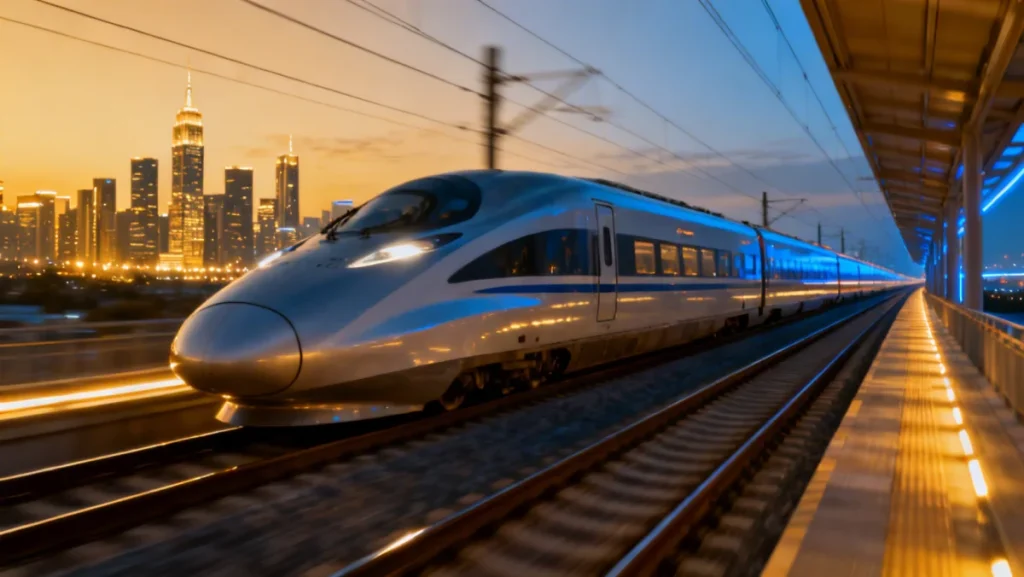
The federal government’s ambitious plan for high-speed rail expansion by 2026 aims to revolutionize American transportation, connecting five major corridors with advanced rail networks that promise efficiency, sustainability, and economic growth.
The United States is on the cusp of a transformative era in travel, with a monumental federal plan for high-speed rail expansion by 2026 set to redefine how Americans move across the nation. This initiative aims to connect five major corridors, promising not only faster journeys but also a significant leap towards sustainable and efficient transportation infrastructure. It’s a vision that blends cutting-edge technology with environmental responsibility, poised to reshape regional economies and daily commutes alike.
The Vision Behind High-Speed Rail Expansion
The federal government’s commitment to high-speed rail is more than just an infrastructure project; it’s a strategic move towards modernizing America’s transportation landscape. For decades, the nation has relied heavily on air and road travel, but the increasing demand for efficient, eco-friendly alternatives has brought high-speed rail to the forefront. This ambitious plan seeks to alleviate congestion, reduce carbon emissions, and foster economic development in connected regions.
The initiative is rooted in a comprehensive understanding of future transportation needs, considering population growth, environmental concerns, and technological advancements. It represents a bold step away from past limitations, embracing a future where rapid, intercity travel is accessible and commonplace. The overarching goal is to create a seamless network that competes with, and in many cases surpasses, the convenience and speed of other modes of transport.
Addressing historical challenges
Previous attempts at large-scale rail projects in the U.S. have faced various hurdles, from funding issues to political complexities. This new federal plan, however, has learned from these experiences. It emphasizes robust public-private partnerships and a streamlined regulatory process to ensure timely and effective implementation. The focus is on building resilient infrastructure that can withstand the test of time and future demands.
- Funding Mechanisms: A mix of federal appropriations, state contributions, and private investments.
- Regulatory Streamlining: Efforts to expedite environmental reviews and permitting processes.
- Community Engagement: Proactive outreach to local communities to address concerns and gather support.
Ultimately, the vision is about creating a legacy of modern transportation that serves generations. It’s about connecting people, businesses, and cultures in a way that is both efficient and environmentally conscious. The success of this high-speed rail expansion hinges on strong leadership, collaborative efforts, and a shared national commitment to progress.
Connecting the Corridors: A National Overview
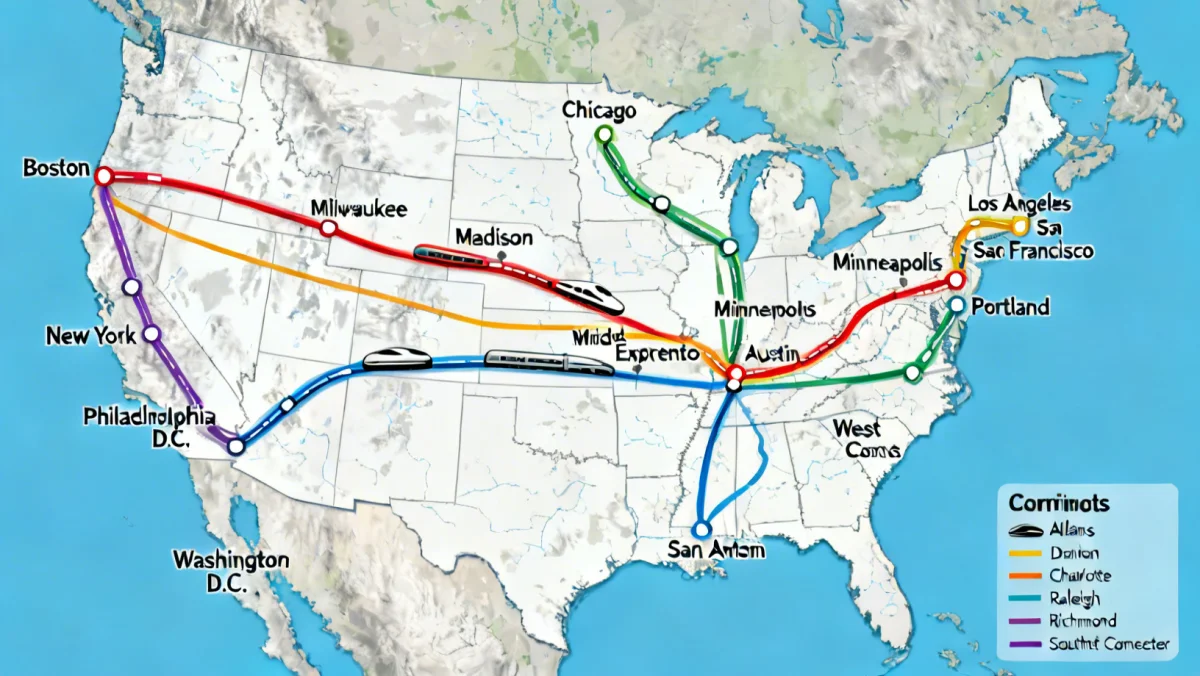
The heart of the federal plan lies in the strategic selection and development of five major corridors. These routes have been chosen based on population density, economic potential, and the ability to serve as vital links between key urban centers. Each corridor presents unique opportunities and challenges, but together they form the backbone of a new national high-speed rail network.
The selection process involved extensive research and consultation, ensuring that the chosen corridors would yield the greatest benefits in terms of ridership, economic impact, and reduction in travel times. The aim is to create routes that are not merely fast, but also integrate seamlessly with existing transportation infrastructure, offering multimodal options for travelers.
The five pivotal corridors unveiled
While specific route details are still being finalized, the general areas designated for these corridors underscore their strategic importance. These include routes that will link major economic hubs and provide alternatives to heavily congested air and road networks.
- Northeast Corridor (NEC) Enhancement: Upgrading and expanding existing lines to achieve true high-speed capabilities.
- California High-Speed Rail: Connecting major cities within California, serving as a model for future projects.
- Texas Central Railway: A privately funded initiative connecting Dallas and Houston, showcasing innovative partnership models.
- Pacific Northwest Corridor: Linking cities like Seattle, Portland, and Vancouver (BC), fostering cross-border economic ties.
- Southeast Corridor: Connecting major metropolitan areas in the Southeast, addressing growing population needs.
These corridors are not just lines on a map; they represent pathways to economic revitalization and enhanced connectivity. The development of each corridor will involve significant engineering feats, including the construction of new tracks, bridges, and tunnels, all designed to accommodate the speeds and safety standards of modern high-speed rail. The focus remains on maximizing efficiency and minimizing environmental impact throughout the construction and operational phases.
Economic Impact and Job Creation
The federal plan for high-speed rail expansion is projected to deliver substantial economic benefits across the nation. Beyond the immediate advantages of faster travel, the project is a powerful engine for job creation, stimulating growth in various sectors, and fostering long-term economic stability in the regions it serves. This investment in infrastructure is expected to have a ripple effect, boosting local economies and attracting new businesses.
The sheer scale of the project necessitates a massive workforce, from engineers and construction workers to manufacturing and service industry professionals. This demand for labor will create thousands of direct and indirect jobs, providing opportunities for skilled workers and contributing to economic recovery and growth. The economic stimulus extends beyond the construction phase, as operational high-speed rail lines will require ongoing maintenance, staffing, and support services.
Catalyst for regional development
High-speed rail corridors often act as catalysts for regional development, transforming areas around stations into vibrant economic hubs. Real estate values tend to increase, and new businesses are attracted to the improved connectivity and accessibility. This leads to a virtuous cycle of investment, job creation, and urban revitalization.
- Increased Tourism: Easier access to destinations will boost local tourism industries.
- Business Relocation: Companies may choose to relocate to areas with superior transportation links.
- Commuter Benefits: Expanded commuting options can open up new labor markets for employers and employees.
The long-term economic impact is not limited to the immediate vicinity of the rail lines. Enhanced connectivity facilitates the movement of goods and services, integrating regional economies more tightly into the national framework. This improved logistical efficiency can reduce costs for businesses and consumers alike, fostering greater competitiveness and innovation. The investment is seen as a strategic play for long-term national prosperity.
Environmental Benefits and Sustainability
One of the most compelling arguments for the federal high-speed rail expansion is its significant environmental benefits. As the world grapples with climate change, shifting away from carbon-intensive transportation methods is crucial. High-speed rail offers a greener alternative to air and road travel, promising a substantial reduction in greenhouse gas emissions and a more sustainable future.
Trains are inherently more energy-efficient per passenger-mile than cars or airplanes, especially when powered by renewable energy sources. The development of these new corridors is being planned with sustainability at its core, incorporating eco-friendly construction practices and aiming for minimal disruption to natural habitats. This commitment to environmental stewardship is a cornerstone of the entire initiative.
Reducing carbon footprint
By offering a viable alternative to short-haul flights and long-distance driving, high-speed rail can significantly decrease the transportation sector’s carbon footprint. A single high-speed train can carry hundreds of passengers, effectively removing numerous cars from highways and reducing the number of short-haul flights. This collective impact translates into substantial environmental gains.
- Lower Emissions: Significantly less CO2 per passenger compared to cars and planes.
- Reduced Congestion: Alleviates traffic on roads and in airports, leading to less idling and emissions.
- Land Use Efficiency: High-speed rail requires less land per passenger than highways or airports.
Furthermore, the construction and operation of these rail lines are incorporating advanced technologies to monitor and mitigate environmental impacts. This includes using recycled materials, implementing noise reduction strategies, and protecting local ecosystems. The goal is not just to build a transportation system but to build a sustainable one that aligns with national and global environmental objectives. The long-term environmental dividends are expected to be substantial, contributing to a healthier planet.
Technological Innovations and Safety Standards
The success of the federal high-speed rail expansion relies heavily on adopting cutting-edge technological innovations and adhering to the highest safety standards. Modern high-speed rail systems are marvels of engineering, incorporating advanced signaling, communication, and train control systems to ensure both speed and passenger safety. This commitment to technology is what distinguishes these new projects.
From magnetic levitation (maglev) technologies being explored for future routes to advanced conventional rail systems, the plan embraces innovation. These technologies not only enable trains to reach incredible speeds but also enhance ride comfort, energy efficiency, and operational reliability. The focus is on creating a state-of-the-art transportation experience that is both fast and secure for all passengers.
Ensuring passenger safety
Safety is paramount in high-speed rail design and operation. The federal plan mandates stringent safety protocols and technologies that go beyond current industry standards. This includes sophisticated collision avoidance systems, robust track integrity monitoring, and comprehensive emergency response capabilities. Every aspect of the system, from the tracks to the train cars, is designed with passenger and crew safety as the top priority.
- Advanced Signaling Systems: Ensuring safe train separation and preventing collisions.
- Automated Train Control: Minimizing human error and optimizing operational efficiency.
- Emergency Preparedness: Comprehensive plans for rapid response to any unforeseen incidents.
The integration of digital technologies, such as real-time diagnostics and predictive maintenance, will further enhance safety and reliability. These systems allow operators to monitor the health of the infrastructure and rolling stock, identifying potential issues before they become problems. This proactive approach to maintenance and safety ensures that the high-speed rail network will operate with unparalleled levels of security and efficiency for decades to come.
Challenges and the Path Forward
While the federal plan for high-speed rail expansion by 2026 presents an exciting future, it is not without its challenges. Implementing such a large-scale infrastructure project across diverse geographical and political landscapes requires overcoming significant hurdles. These include securing consistent funding, navigating complex land acquisition processes, and managing public perception and potential opposition.
The path forward demands sustained political will, innovative financing solutions, and effective stakeholder engagement. Building public trust and demonstrating the tangible benefits of high-speed rail will be crucial for maintaining momentum and securing the necessary support for successful completion. The federal government acknowledges these challenges and is implementing strategies to address them proactively.
Overcoming implementation hurdles
One of the primary challenges is the sheer cost of building high-speed rail infrastructure. While the long-term economic and environmental benefits are clear, the initial capital investment is substantial. The plan aims to mitigate this through a combination of federal grants, state partnerships, and private sector investment, diversifying funding sources to ensure financial stability.
- Land Acquisition: Streamlining eminent domain processes while ensuring fair compensation for affected landowners.
- Interstate Coordination: Harmonizing regulations and standards across multiple states for seamless operation.
- Public Acceptance: Educating the public on the benefits and addressing concerns about noise, visual impact, and property values.
Despite these obstacles, the commitment to the high-speed rail expansion remains strong. The federal government, along with state and local partners, is dedicated to finding innovative solutions and fostering collaborative environments. The long-term vision of a connected, sustainable, and economically vibrant nation powered by modern rail transportation provides the motivation to overcome these challenges and pave the way for a new era of American travel.
| Key Aspect | Brief Description |
|---|---|
| Project Goal | Modernize US transportation by connecting five major corridors with high-speed rail by 2026. |
| Economic Impact | Generates thousands of jobs, stimulates regional development, and boosts tourism and business relocation. |
| Environmental Benefits | Reduces carbon emissions, alleviates road/air congestion, and promotes sustainable travel alternatives. |
| Key Challenges | Funding, land acquisition, interstate coordination, and securing public acceptance. |
Frequently Asked Questions About High-Speed Rail Expansion
The primary goals include modernizing American transportation, reducing travel times between major cities, fostering economic growth in connected regions, and significantly decreasing carbon emissions by offering a sustainable alternative to current travel methods. It aims to create a more integrated and efficient national network.
The plan focuses on enhancing the Northeast Corridor, advancing the California High-Speed Rail, supporting the Texas Central Railway, developing the Pacific Northwest Corridor, and establishing a new Southeast Corridor. These routes were chosen for their strategic importance and potential for high ridership and economic impact.
The project is expected to create thousands of direct and indirect jobs across various sectors, including engineering, construction, manufacturing, and operations. It will stimulate local economies, provide skilled labor opportunities, and boost regional development both during construction and throughout ongoing operations.
High-speed rail offers significant environmental advantages by reducing greenhouse gas emissions compared to car and air travel. It aims to alleviate traffic congestion, improve air quality, and promote more sustainable land use. The plan emphasizes eco-friendly construction and operation practices to minimize ecological impact.
Key challenges include securing consistent funding, navigating complex land acquisition processes across multiple states, ensuring interstate coordination, and gaining broad public acceptance. Overcoming these hurdles requires strong political commitment, innovative financing, and continuous engagement with all stakeholders involved in the project.
Conclusion
The federal plan for high-speed rail expansion by 2026 represents a pivotal moment in American transportation history. By committing to connecting five major corridors, the nation is poised to embrace a future where travel is faster, more sustainable, and economically stimulating. While challenges undoubtedly lie ahead, the potential rewards—from significant job creation and regional economic growth to a drastic reduction in carbon emissions and enhanced passenger safety—underscore the immense value of this bold initiative. This visionary project is not just about building tracks; it’s about laying the foundation for a more connected, efficient, and environmentally responsible America.
Autor