FEMA’s 2026 Initiatives: Bolstering US Disaster Resilience
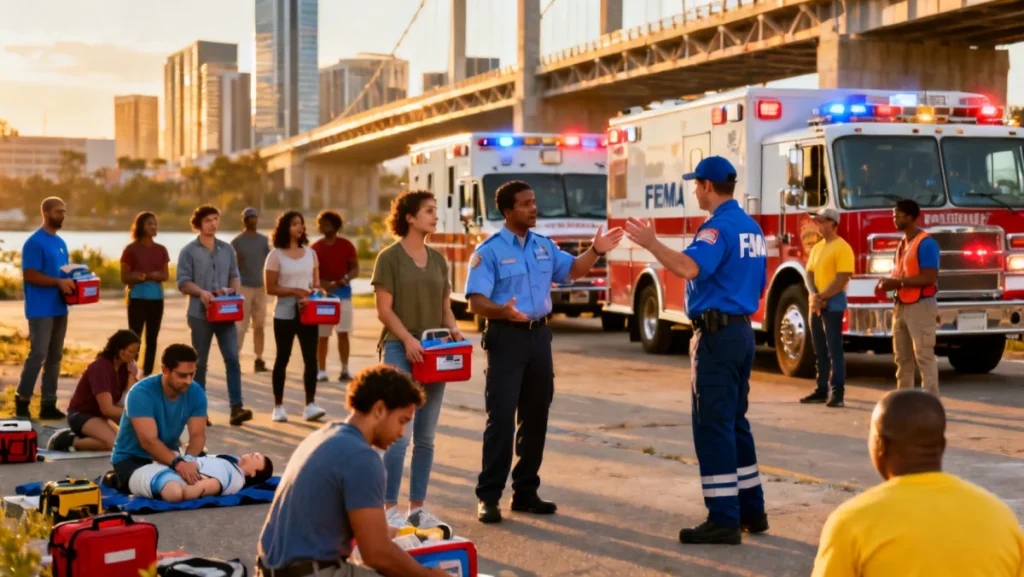
FEMA’s 2026 initiatives, bolstered by a 12% budget increase, are strategically designed to enhance national resilience against natural catastrophes through advanced preparedness, mitigation, and recovery programs across the United States.
As natural catastrophes intensify in frequency and severity, the need for robust disaster preparedness has never been more critical. The Federal Emergency Management Agency (FEMA) is stepping up its efforts, with Disaster Preparedness: FEMA’s 2026 Initiatives to Bolster National Resilience Against Natural Catastrophes, a 12% Budget Increase, marking a pivotal moment in the nation’s strategy to safeguard communities. This significant investment and strategic shift underscore a proactive approach to future challenges, aiming to fortify the United States against the unpredictable forces of nature.
Understanding the 12% Budget Increase and Its Impact
The allocation of an additional 12% to FEMA’s budget for 2026 represents a substantial commitment by the U.S. government to enhance disaster resilience. This increase is a direct response to the escalating costs and human toll of recent natural disasters, acknowledging that preventative measures and improved response capabilities are far more effective than reactive recovery efforts alone. The funds are earmarked for a range of critical areas, from cutting-edge technological advancements to grassroots community programs, all designed to create a more resilient nation.
This boost in funding allows FEMA to expand its reach and deepen its impact, moving beyond traditional response models to embrace a comprehensive strategy that emphasizes readiness and adaptation. It signals a recognition that climate change and other environmental factors are reshaping the landscape of natural hazards, demanding a more robust and flexible approach to disaster management.
Strategic Allocation of New Funds
The 12% budget increase isn’t just about more money; it’s about smarter investment. FEMA plans to strategically distribute these funds across several key pillars of disaster preparedness and resilience. These pillars include:
- Infrastructure Hardening: Investing in resilient infrastructure, such as stronger buildings, improved coastal defenses, and updated utility grids, to withstand extreme weather events.
- Early Warning Systems: Enhancing and deploying advanced early warning and alert systems to provide communities with more lead time to prepare and evacuate.
- Community Preparedness Programs: Expanding educational initiatives and training programs at the local level to empower individuals and neighborhoods to take proactive steps.
- Technological Advancements: Funding research and development into new technologies for disaster prediction, response, and recovery, including AI and data analytics.
The strategic distribution aims to create a multi-layered defense system, addressing vulnerabilities from the ground up while leveraging innovation to stay ahead of emerging threats. This holistic approach is crucial for building sustainable resilience in the face of increasingly complex disaster scenarios.
Ultimately, the 12% budget increase is not merely an expenditure; it is an investment in the future safety and stability of American communities. By bolstering FEMA’s capabilities, the nation is better positioned to mitigate the impacts of natural catastrophes, protect lives, and accelerate recovery.
Enhancing Community Preparedness and Engagement
Central to FEMA’s 2026 initiatives is a renewed focus on empowering communities and fostering a culture of preparedness. Disasters often hit local communities the hardest, and their ability to withstand and recover depends heavily on local readiness. FEMA aims to shift the paradigm from a top-down approach to one that actively involves residents, local governments, and community organizations in the planning and execution of preparedness strategies.
This involves tailoring programs to the specific risks faced by different regions, acknowledging that a one-size-fits-all approach is insufficient. For instance, coastal communities face hurricane threats, while central states contend with tornadoes and wildfires pose a perpetual danger in western regions. Understanding these localized risks is the first step toward effective preparedness.
Grassroots Initiatives and Local Partnerships
FEMA plans to significantly expand its support for grassroots initiatives, recognizing that local knowledge and resources are invaluable. This includes:
- Community Emergency Response Teams (CERT): Providing more funding and training for CERT programs, which educate volunteers about disaster preparedness and response skills.
- Local Mitigation Planning: Assisting local governments in developing comprehensive mitigation plans that identify hazards, assess risks, and implement strategies to reduce potential losses.
- Public Awareness Campaigns: Launching targeted public awareness campaigns to educate citizens on specific local hazards and what steps they can take to prepare their families and homes.
These initiatives are designed to build a robust network of informed and prepared citizens, capable of acting as first responders within their own communities until professional aid arrives. Partnerships with local non-profits, businesses, and educational institutions are also crucial to amplify these efforts and ensure broad community buy-in.
The emphasis on community engagement ensures that preparedness is not just a government mandate but a shared responsibility. By fostering strong local partnerships and empowering residents, FEMA aims to create resilient communities that are not only better equipped to face disasters but also quicker to recover and rebuild.
Technological Innovations for Disaster Mitigation and Response
The digital age offers unprecedented opportunities to improve disaster preparedness and response. FEMA’s 2026 initiatives leverage advanced technologies to enhance every stage of disaster management, from early detection and warning to efficient resource allocation and post-disaster recovery. This technological push is vital for managing the increasing complexity and scale of natural catastrophes.
Investments in data science, artificial intelligence, and sophisticated modeling techniques are set to revolutionize how FEMA predicts, tracks, and responds to events. These tools provide a clearer picture of potential impacts, allowing for more precise resource deployment and targeted interventions.
Leveraging Data and AI for Predictive Analysis
FEMA is looking to integrate cutting-edge technologies to bolster its operational capabilities. Key areas of focus include:
- Advanced Predictive Models: Utilizing AI and machine learning to analyze vast datasets, including weather patterns, seismic activity, and historical disaster data, to predict potential disaster scenarios with greater accuracy.
- Real-time Information Sharing: Developing enhanced platforms for real-time data sharing among federal, state, and local agencies, ensuring that all stakeholders have access to the most current information during an emergency.
- Satellite Imagery and GIS: Expanding the use of satellite imagery and Geographic Information Systems (GIS) for rapid damage assessment, mapping critical infrastructure, and identifying vulnerable populations post-disaster.
These technological advancements are not just about efficiency; they are about saving lives and minimizing economic disruption. By providing actionable intelligence faster and more accurately, FEMA can ensure that resources are deployed where they are needed most, reducing response times and improving overall effectiveness.
The integration of technology into disaster mitigation and response is a game-changer. It allows for a more proactive stance, transforming FEMA’s ability to anticipate and react to natural catastrophes, ultimately contributing to a more secure and resilient nation.
Strengthening Critical Infrastructure and Supply Chains
The resilience of a nation hinges significantly on the robustness of its critical infrastructure and the reliability of its supply chains. Natural catastrophes often expose vulnerabilities in these essential systems, leading to widespread disruptions that can cripple communities and impede recovery efforts. FEMA’s 2026 initiatives place a strong emphasis on fortifying these foundations to ensure continuity during and after a disaster.
This includes not only physical infrastructure like roads, bridges, and power grids but also the complex networks that deliver essential goods and services. A disruption in one part of the system can have cascading effects, underscoring the need for a comprehensive and integrated approach to resilience.
Investing in Hardening and Redundancy
FEMA’s strategy involves targeted investments aimed at making infrastructure more resilient to various hazards. This encompasses:
- Infrastructure Hardening Projects: Funding projects to reinforce essential infrastructure against specific threats, such as strengthening buildings against seismic activity or elevating structures in flood-prone areas.
- Supply Chain Resilience Programs: Collaborating with private sector partners to identify vulnerabilities in critical supply chains and develop strategies for diversification and redundancy to prevent widespread shortages during emergencies.
- Cybersecurity for Critical Systems: Enhancing cybersecurity measures for operational technology systems that control infrastructure, protecting them from cyberattacks that could exacerbate disaster impacts.
The goal is to create systems that can not only withstand the initial impact of a disaster but also recover quickly. This involves building in redundancies and alternative pathways for vital services, ensuring that even if one component fails, the overall system can continue to function.
By prioritizing the strengthening of critical infrastructure and supply chains, FEMA is building a more durable framework for national resilience. These efforts are fundamental to minimizing the long-term economic and social impacts of natural catastrophes, allowing communities to bounce back faster and stronger.
Interagency Collaboration and Integrated Response Frameworks
Effective disaster management is rarely the sole responsibility of a single agency; it requires seamless coordination and collaboration across multiple governmental bodies, non-profits, and the private sector. FEMA’s 2026 initiatives place a significant emphasis on strengthening interagency collaboration and developing integrated response frameworks to ensure a unified and efficient approach to natural catastrophes.
This means breaking down silos between federal, state, and local entities, as well as fostering stronger partnerships with organizations that play crucial roles in preparedness, response, and recovery. The goal is to create a cohesive national strategy where all actors understand their roles and can work together effectively.
Streamlining Coordination and Information Flow
To achieve this enhanced collaboration, FEMA is focusing on several key areas:
- Joint Training Exercises: Increasing the frequency and scope of joint training exercises involving various agencies to improve operational coordination and communication during real-world events.
- Standardized Communication Protocols: Implementing standardized communication protocols and platforms to ensure consistent and clear information flow across all levels of government and partner organizations.
- Resource Sharing Agreements: Establishing robust resource sharing agreements to facilitate the rapid deployment of personnel, equipment, and supplies from various agencies to affected areas.
These efforts are designed to eliminate redundancies, reduce confusion, and accelerate the delivery of aid and services when disaster strikes. By fostering a culture of shared responsibility and mutual support, FEMA aims to create a more agile and responsive national disaster management system.
An integrated response framework is crucial for tackling the multifaceted challenges posed by natural catastrophes. Through enhanced interagency collaboration, FEMA is building a more cohesive and effective national defense against disaster, ensuring that all resources are optimally utilized to protect and serve communities.
Addressing Climate Change and Future Risk Assessment
The increasing frequency and intensity of natural catastrophes are inextricably linked to climate change, posing unprecedented challenges for disaster preparedness. FEMA’s 2026 initiatives recognize this reality and are integrating climate change considerations into every aspect of its planning and operations. This involves not only adapting to current climate impacts but also proactively assessing future risks.
Understanding future climate scenarios is critical for long-term resilience planning. This forward-looking approach ensures that investments in infrastructure, early warning systems, and community programs are robust enough to withstand the environmental challenges of tomorrow.
Integrating Climate Data into Preparedness
FEMA is committed to incorporating the latest climate science into its risk assessment and mitigation strategies. Key actions include:
- Climate-Informed Risk Assessments: Developing and utilizing advanced climate models to conduct more accurate and detailed risk assessments that account for future changes in sea levels, extreme weather patterns, and wildfire risks.
- Sustainable Mitigation Practices: Promoting and funding sustainable mitigation practices that not only reduce disaster risks but also contribute to climate adaptation and environmental protection, such as nature-based solutions.
- Educating Stakeholders on Climate Risks: Providing resources and training to state and local governments, as well as the public, on how climate change impacts their specific regions and what steps can be taken to enhance resilience.
This integration of climate data into preparedness efforts allows FEMA to make more informed decisions about where and how to invest its resources, ensuring that the nation is building resilience against both present and future threats. It represents a fundamental shift towards a more comprehensive and sustainable approach to disaster management.
By proactively addressing climate change and its implications for disaster risk, FEMA is not just preparing for the next storm or fire; it is laying the groundwork for a more resilient and sustainable future for all American communities. This forward-thinking strategy is essential for navigating the evolving landscape of natural catastrophes.
| Key Initiative | Brief Description |
|---|---|
| Budget Increase | A 12% increase for 2026, signaling enhanced commitment to disaster preparedness and resilience. |
| Community Engagement | Expanded local programs and partnerships to empower residents in preparedness and response. |
| Technological Advancements | Deployment of AI, data analytics, and early warning systems for better prediction and response. |
| Infrastructure Hardening | Investments in resilient infrastructure and secure supply chains to withstand disaster impacts. |
Frequently Asked Questions About FEMA’s 2026 Initiatives
The primary goal of FEMA’s 2026 initiatives is to significantly bolster national resilience against natural catastrophes. This involves enhancing preparedness, mitigation, and recovery efforts through strategic investments, technological advancements, and strengthened community engagement, ultimately aiming to reduce the human and economic toll of disasters.
The 12% budget increase will be strategically allocated across several key areas. These include infrastructure hardening, expanding early warning systems, enhancing community preparedness programs, and investing in technological advancements like AI for predictive analysis and improved real-time information sharing during emergencies.
FEMA plans to involve local communities through expanded grassroots initiatives, increased funding for Community Emergency Response Teams (CERT), assistance with local mitigation planning, and targeted public awareness campaigns. The goal is to empower residents and foster local partnerships for tailored and effective preparedness strategies.
Technology plays a crucial role by leveraging advanced predictive models using AI and machine learning, enhancing real-time information sharing platforms, and expanding the use of satellite imagery and GIS for rapid damage assessment. These tools aim to improve disaster prediction, response efficiency, and resource allocation.
FEMA is integrating climate change by conducting climate-informed risk assessments, promoting sustainable mitigation practices, and educating stakeholders on regional climate impacts. This ensures that preparedness efforts are robust enough to address both current and future climate-related disaster risks, fostering long-term resilience.
Conclusion
The commitment embodied in Disaster Preparedness: FEMA’s 2026 Initiatives to Bolster National Resilience Against Natural Catastrophes, a 12% Budget Increase, represents a forward-thinking and essential evolution in the United States’ approach to managing natural disasters. By channeling significant resources into critical areas such as infrastructure hardening, technological innovation, and, crucially, community empowerment, FEMA is laying a robust foundation for a more resilient nation. These strategic investments are not merely about reacting to crises but about proactively building a durable defense against the escalating threats posed by natural catastrophes, ensuring that American communities are better prepared to withstand, respond to, and swiftly recover from future challenges.
Autor