2026 Economic Outlook: Job Market Stability & Income Growth

The 2026 Economic Outlook predicts a landscape of sustained job market stability and gradual income growth in the United States, influenced by ongoing technological integration and adaptive economic policies.
As we approach 2026, understanding the 2026 economic outlook: a financial forecast for job market stability and income growth becomes crucial for individuals, businesses, and policymakers alike. This intricate forecast offers a glimpse into the potential trajectory of the United States economy, highlighting areas of resilience and opportunity.
Analyzing Current Economic Indicators
The present economic climate serves as the foundation for any future forecast. Examining key indicators such as inflation rates, consumer spending, and manufacturing output provides essential insights into the economy’s current health. These metrics help us understand the momentum carrying into 2026.
Recent data indicates a mixed but generally resilient economic performance. While inflation has shown signs of moderation, consumer spending remains robust, buoyed by a relatively strong labor market. Manufacturing, though facing global supply chain complexities, continues to adapt and innovate.
Inflation and Monetary Policy
Inflationary pressures have been a significant concern over the past few years. Central banks, particularly the Federal Reserve, have responded with various monetary policies aimed at stabilizing prices without stifling economic growth. The effectiveness of these policies will heavily influence the 2026 outlook.
- Interest Rate Adjustments: The Fed’s stance on interest rates will impact borrowing costs for consumers and businesses.
- Quantitative Tightening: Policies to reduce the money supply can cool down an overheated economy.
- Global Economic Factors: Geopolitical events and international trade dynamics can influence domestic inflation.
The ongoing battle against inflation is expected to continue shaping monetary policy decisions, which in turn will have ripple effects across all sectors of the economy. A delicate balance must be struck to ensure price stability while fostering sustainable growth.
Projections for Job Market Stability
A stable job market is a cornerstone of a healthy economy, directly impacting consumer confidence and spending power. The 2026 forecast suggests continued resilience in employment figures, albeit with evolving demands in various sectors. The focus shifts towards adaptability and skill development.
Automation and artificial intelligence are reshaping traditional job roles, creating new opportunities in technology-driven fields while potentially displacing others. This dynamic environment necessitates continuous upskilling and reskilling initiatives to maintain a competitive workforce.
Emerging Job Sectors
Several sectors are poised for significant growth, contributing to overall job stability. These areas often require specialized skills and offer higher-than-average wages, attracting talent and investment.
- Technology and AI: Demand for AI specialists, data scientists, and cybersecurity experts continues to surge.
- Green Economy: Jobs in renewable energy, sustainable manufacturing, and environmental consulting are expanding rapidly.
- Healthcare and Biotechnology: An aging population and advancements in medical science drive continuous growth in these fields.
The shift towards these emerging sectors underscores the importance of education and vocational training programs that align with future labor market needs. Government initiatives and private sector investments in these areas will be critical for fostering sustained job growth.
Forecasted Income Growth Trends
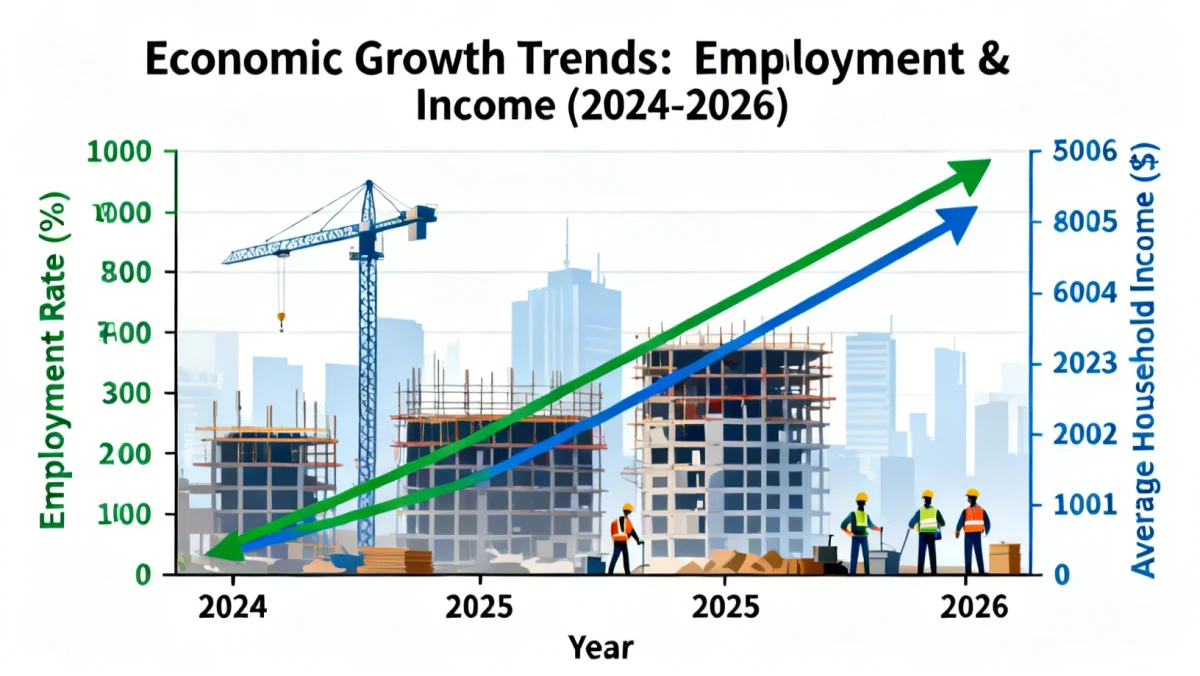
Income growth is a vital component of economic prosperity, reflecting improved living standards and increased purchasing power. The 2026 economic outlook anticipates a moderate, yet steady, increase in real wages, influenced by productivity gains and labor market dynamics.
While inflation has eroded some of the recent wage gains, the expectation is that real income growth will resume as price pressures ease and productivity improvements take hold. This trend is crucial for maintaining consumer demand and economic momentum.
Factors Influencing Wage Increases
Several factors contribute to the trajectory of income growth. Understanding these elements helps paint a clearer picture of what workers can expect in the coming years.
- Productivity Enhancements: Technological advancements and automation can lead to higher output per worker, justifying increased wages.
- Labor Shortages: In specific high-demand sectors, a scarcity of skilled workers can drive up salaries.
- Minimum Wage Policies: State and federal minimum wage adjustments can impact the lower end of the income spectrum.
The interplay of these factors will determine the pace and distribution of income growth across different demographic groups and industries. Policies aimed at enhancing worker skills and promoting fair wage practices will be essential for equitable prosperity.
Technological Advancements and Economic Impact
Technological innovation remains a primary driver of economic change and growth. From artificial intelligence to advanced robotics, these advancements are not only transforming industries but also creating entirely new economic paradigms. Their influence on the 2026 economic outlook is profound.
The rapid adoption of cutting-edge technologies is boosting efficiency, streamlining operations, and fostering unprecedented levels of innovation. This digital transformation is a double-edged sword, offering immense opportunities while also posing challenges related to workforce adaptation.
Key Technological Trends
Specific technological trends are expected to have a disproportionate impact on the economy, shaping future markets and job landscapes.
- Artificial Intelligence (AI): AI’s integration into various business processes will enhance productivity and decision-making.
- Automation and Robotics: Increased automation in manufacturing and logistics will optimize supply chains and reduce costs.
- Blockchain Technology: Its applications in finance, supply chain management, and data security will grow, enhancing transparency and efficiency.
These technological shifts demand proactive strategies from businesses to remain competitive and from governments to ensure that the benefits of innovation are widely distributed. Investment in research and development will be crucial for sustained economic leadership.
Government Policies and Regulatory Environment
Government policies and the regulatory environment play a pivotal role in shaping the economic landscape. Fiscal policies, tax reforms, and regulatory frameworks can either stimulate or constrain economic activity. The 2026 outlook will be significantly influenced by current and future legislative decisions.
Policies aimed at fostering business growth, supporting small enterprises, and investing in infrastructure can create a conducive environment for economic expansion. Conversely, overly burdensome regulations or unstable fiscal policies can deter investment and hinder progress.
Impact of Fiscal and Monetary Policies
The coordination between fiscal and monetary policies is critical for achieving desired economic outcomes. These policies work in tandem to manage inflation, stimulate growth, and maintain financial stability.
- Tax Reforms: Changes in corporate and individual tax rates can influence investment and consumer spending.
- Infrastructure Spending: Government investments in infrastructure projects create jobs and improve economic efficiency.
- Trade Agreements: International trade policies can open new markets and reduce barriers, fostering global economic integration.
The regulatory landscape is continuously evolving, with increasing emphasis on areas such as data privacy, environmental protection, and antitrust enforcement. Businesses must navigate these changes effectively to ensure compliance and leverage new opportunities.
Global Economic Influences and Trade Dynamics
The United States economy does not operate in isolation; it is deeply intertwined with global economic trends and international trade dynamics. Geopolitical events, global supply chain stability, and the economic performance of major trading partners significantly impact the domestic outlook for 2026.
Disruptions in global supply chains, as experienced recently, can lead to inflationary pressures and production delays. Conversely, stable international relations and robust trade agreements can foster economic growth and provide access to new markets.
Key Global Economic Factors
Several international factors will be particularly influential on the US economic outlook in the coming years.
- Geopolitical Stability: Conflicts and political instability in key regions can disrupt trade and financial markets.
- Commodity Prices: Fluctuations in oil, gas, and other raw material prices impact production costs and consumer spending.
- Economic Performance of Trading Partners: The growth or contraction of economies like China, the EU, and India directly affects US exports and imports.
Navigating these global complexities requires a strategic approach to international relations and trade policy. Diversifying supply chains and fostering strong diplomatic ties will be essential for mitigating risks and capitalizing on global opportunities.
| Key Economic Aspect | 2026 Forecast Summary |
|---|---|
| Job Market Stability | Continued resilience with evolving demands, particularly in tech and green sectors. |
| Income Growth | Moderate and steady real wage increases, supported by productivity gains. |
| Technological Impact | Significant influence from AI, automation, and blockchain, driving efficiency and new markets. |
| Government Policies | Fiscal and monetary decisions crucial for managing inflation and fostering growth. |
Frequently Asked Questions About the 2026 Economic Outlook
Job market stability in 2026 is primarily driven by continued growth in technology, green energy, and healthcare sectors. These industries are creating new roles and demanding specialized skills, balancing out potential displacements from automation and maintaining overall employment levels.
While inflation has recently impacted real income, the 2026 economic outlook suggests a moderation of price pressures. This moderation, combined with productivity gains and targeted wage increases in high-demand sectors, is expected to lead to a moderate but steady growth in real disposable income.
Technology, particularly AI, automation, and blockchain, will be a transformative force in 2026. It will enhance productivity, streamline operations, and open up new markets. However, it will also necessitate continuous upskilling of the workforce to adapt to evolving job requirements.
Potential risks to the 2026 economic forecast include persistent global supply chain disruptions, unforeseen geopolitical events, and the effectiveness of monetary and fiscal policies in managing inflation without triggering a significant downturn. Cybersecurity threats also remain a concern.
Individuals can prepare by investing in skills development, particularly in emerging technological fields. Diversifying investments, maintaining a robust emergency fund, and staying informed about economic trends and policy changes will also be crucial for financial resilience and growth.
Conclusion
The 2026 economic outlook presents a compelling picture of an economy in transition, balancing the forces of innovation, global interconnectedness, and policy adjustments. While challenges remain, the prevailing sentiment points towards continued job market stability and a gradual, yet meaningful, increase in income. Navigating this landscape successfully will require adaptability from individuals and strategic foresight from businesses and governments, ensuring that the benefits of economic growth are widely shared and sustained over the long term.
Autor