AI in US Classrooms 2026: A 6-Month Integration Review
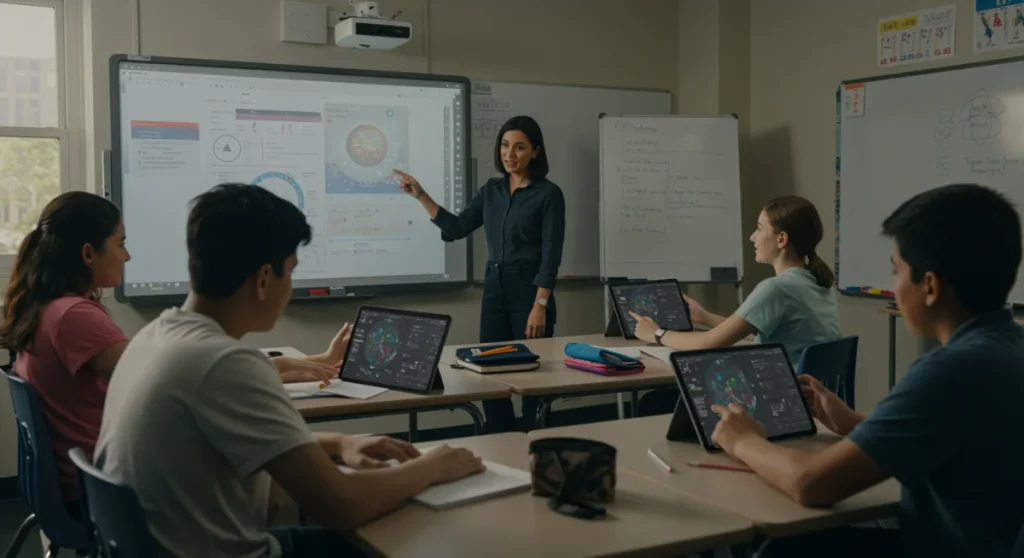
The impact of AI on US classrooms by 2026 has been significant, with a six-month review revealing diverse integration strategies focusing on personalized learning, administrative efficiency, and enhanced student engagement.
In the rapidly evolving landscape of education, the integration of artificial intelligence has moved from theoretical discussion to practical implementation. This article delves into the impact of AI on US classrooms by 2026, providing a comprehensive 6-month review of the strategies employed, the challenges encountered, and the promising outcomes observed since its widespread adoption. How is AI truly transforming the learning experience for American students?
The initial wave of AI adoption in US schools
The first half of 2026 saw an unprecedented push for AI integration across various US school districts. This initial wave was largely driven by a combination of technological advancements, increased accessibility to AI tools, and a growing recognition of AI’s potential to address long-standing educational challenges. Early strategies focused on identifying low-risk, high-impact applications to build confidence among educators and students.
Many districts prioritized AI tools that could automate routine tasks, thereby freeing up teachers to focus more on direct instruction and individualized student support. This pragmatic approach helped mitigate some of the initial concerns regarding job displacement and the complexity of new technologies.
Key drivers for early integration
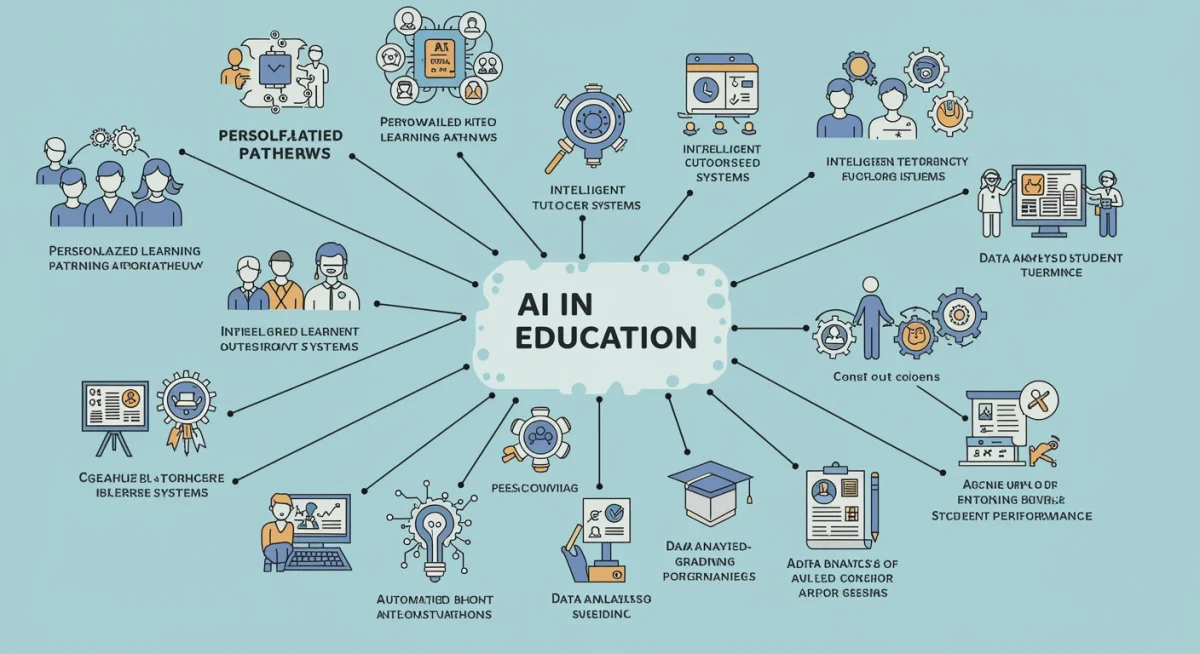
- Personalized learning platforms: AI’s ability to adapt content and pace to individual student needs was a major draw.
- Automated administrative tasks: Streamlining grading, attendance tracking, and scheduling provided immediate benefits.
- Data-driven insights: AI offered new ways to analyze student performance and identify areas for intervention.
The initial phase of AI adoption was marked by a mix of enthusiasm and caution. While the potential benefits were clear, educators and administrators also grappled with the practicalities of implementation, including training, infrastructure, and ethical considerations. Despite these hurdles, the momentum for AI integration continued to build, setting the stage for more advanced applications.
Personalized learning pathways: A cornerstone of AI integration
One of the most significant shifts brought about by AI in US classrooms is the widespread adoption of personalized learning pathways. AI algorithms can analyze student performance data, learning styles, and even emotional responses to tailor educational content that is uniquely suited to each individual. This moves away from the traditional one-size-fits-all model, fostering a more engaging and effective learning environment.
Over the past six months, we’ve seen various AI-powered platforms emerge, offering adaptive curricula that adjust in real-time. These systems can recommend supplementary materials, provide targeted feedback, and even suggest different pedagogical approaches based on how a student is progressing. This level of customization was previously unimaginable for most educators.
Realizing individual potential
Personalized learning is not just about academic progress; it also plays a crucial role in fostering student agency and motivation. When students feel that their learning journey is uniquely crafted for them, they are more likely to take ownership of their education.
- Adaptive content delivery: AI dynamically adjusts lesson difficulty and topic focus.
- Intelligent tutoring systems: AI provides instant, personalized feedback and explanations.
- Skill gap identification: Algorithms pinpoint specific areas where students need additional support.
The early results indicate that students engaging with personalized learning pathways show higher rates of comprehension and retention. Teachers, in turn, can spend less time on generic instruction and more time on high-value interactions, such as mentoring and facilitating deeper discussions. This symbiotic relationship between AI and human educators is proving to be a powerful force in modernizing education.
Challenges and ethical considerations in AI deployment
Despite the revolutionary potential, the rapid deployment of AI in US classrooms has not been without its challenges. Over the past six months, educators and policymakers have grappled with significant ethical concerns, data privacy issues, and the need for equitable access to these advanced technologies. Ensuring that AI benefits all students, regardless of socioeconomic background, remains a critical hurdle.
One major concern revolves around data privacy. AI systems collect vast amounts of student data, from academic performance to behavioral patterns. Safeguarding this sensitive information from breaches and misuse is paramount, requiring robust security protocols and clear guidelines for data handling. Schools are now implementing stricter data governance policies.
Addressing the digital divide
The digital divide poses another significant challenge. Not all students have equal access to reliable internet or devices at home, which can exacerbate existing inequalities if AI-powered learning becomes a primary mode of instruction. Districts are exploring solutions like providing devices and mobile hotspots to bridge this gap.
- Bias in algorithms: Ensuring AI tools are fair and do not perpetuate existing biases.
- Teacher training and adaptation: Equipping educators with the skills to effectively integrate and manage AI.
- Student data privacy: Implementing strict regulations and security measures for sensitive information.
The ethical implications of AI are complex, ranging from potential algorithmic bias that could disadvantage certain student groups to concerns about over-reliance on technology diminishing critical thinking skills. Transparent development and continuous monitoring of AI tools are essential to mitigate these risks and ensure AI serves as a tool for empowerment, not control.
Teacher roles evolving: From instructors to facilitators
The integration of AI into US classrooms is fundamentally reshaping the role of educators. Over the last six months, teachers have transitioned from being primary disseminators of information to becoming facilitators, mentors, and guides in an AI-enhanced learning environment. This shift demands new skill sets and a reevaluation of traditional teaching methodologies.
With AI handling routine tasks like grading, lesson planning, and even initial student support, teachers now have more time to focus on complex aspects of education. This includes fostering socio-emotional development, encouraging critical thinking, and engaging in deeper, more meaningful interactions with students. The human element in education remains irreplaceable, but its focus has sharpened.
New competencies for the modern educator
Professional development programs have been crucial in preparing teachers for this new paradigm. Training often covers not just the technical aspects of using AI tools, but also pedagogical strategies for integrating AI effectively and ethically into the curriculum.
- Curating AI content: Selecting and customizing AI tools to meet specific learning objectives.
- Data interpretation: Using AI-generated insights to inform teaching strategies.
- Ethical AI use: Understanding and addressing biases, privacy, and responsible AI deployment.
The evolving role of teachers highlights a collaborative future where AI supports and enhances human instruction rather than replacing it. Educators are becoming adept at leveraging AI to create richer, more dynamic learning experiences, reaffirming their central role in the educational ecosystem. This evolution ensures that the human touch, empathy, and nuanced understanding remain at the core of teaching.
Measuring impact: Early metrics and future outlook
Assessing the true impact of AI on US classrooms by 2026 requires careful analysis of various metrics. Over the initial six months, schools have begun collecting data on student engagement, academic performance, teacher efficiency, and overall learner satisfaction. Early indicators suggest promising trends, though comprehensive long-term studies are still needed.
Initial data shows a noticeable increase in student engagement, particularly in subjects where AI-powered interactive tools are heavily utilized. Personalized feedback and adaptive challenges appear to keep students more motivated and invested in their learning. Academic performance metrics are also showing upward trends in many pilot programs, especially for students who previously struggled with traditional methods.
Key performance indicators
Districts are employing a range of KPIs to evaluate AI’s effectiveness, moving beyond just test scores to include broader measures of educational success.
- Student achievement rates: Tracking improvements in standardized test scores and classroom assessments.
- Teacher workflow efficiency: Measuring time saved on administrative and grading tasks.
- Student and teacher satisfaction: Gathering qualitative feedback through surveys and interviews.
- Equity in access and outcomes: Monitoring whether AI benefits all student demographics equally.
The future outlook for AI in US classrooms is overwhelmingly positive, with ongoing research and development promising even more sophisticated and integrated solutions. The next phases of AI integration are expected to focus on immersive learning experiences, advanced predictive analytics, and further refinements in ethical AI frameworks, ensuring sustained and equitable progress.
Emerging trends and future directions for AI in education
Looking beyond the initial six-month review, several emerging trends are poised to further shape the impact of AI on US classrooms. The rapid pace of technological innovation suggests that AI’s role in education will continue to expand, offering new opportunities for learning and development. Future directions are focusing on deeper integration and more sophisticated applications.
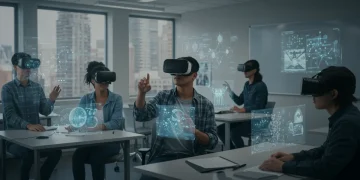
One significant trend is the development of AI-powered virtual reality (VR) and augmented reality (AR) educational environments. These immersive technologies can transport students to historical events, scientific laboratories, or even inside the human body, providing experiential learning that traditional classrooms cannot replicate. This promises a new dimension of engagement and understanding.
Anticipated advancements
The evolution of AI in education is not static; it is a dynamic field constantly pushing boundaries. The next few years will likely see advancements in areas that are currently in their nascent stages.
- AI-driven content creation: Generating customized educational materials on demand.
- Predictive analytics for student well-being: Identifying at-risk students before issues escalate.
- Global learning networks: Connecting students worldwide through AI-mediated collaborative projects.
Another key direction is the use of AI for comprehensive student well-being, not just academic performance. AI could help identify early signs of stress, anxiety, or learning disabilities, allowing for timely interventions and support. The future of AI in education is about creating more holistic, responsive, and globally connected learning ecosystems that prepare students for the challenges and opportunities of tomorrow.
| Key Impact Area | Brief Description |
|---|---|
| Personalized Learning | AI tailors content and pace to individual student needs, enhancing engagement and comprehension. |
| Teacher Role Evolution | Educators shift from instructors to facilitators, focusing on critical thinking and socio-emotional development. |
| Ethical Challenges | Concerns over data privacy, algorithmic bias, and equitable access remain significant hurdles for integration. |
| Future Trends | Emerging areas include AI-powered VR/AR, predictive analytics for well-being, and global learning networks. |
Frequently asked questions about AI in US classrooms
AI significantly impacts personalized learning by adapting educational content and pace to each student’s unique needs and learning style. It provides real-time feedback, recommends tailored resources, and identifies specific areas where students require additional support, creating a more individualized and effective learning experience.
Key challenges include ensuring data privacy and security for student information, addressing potential algorithmic biases, overcoming the digital divide to provide equitable access, and adequately training educators to effectively utilize and manage AI tools in their teaching practices. These require continuous attention and policy development.
Teachers’ roles have evolved from primary instructors to facilitators and mentors. With AI automating routine tasks like grading, educators can now focus more on fostering critical thinking, socio-emotional development, and engaging in deeper, more meaningful interactions with students, enhancing the human element in education.
Early metrics show increased student engagement, particularly with interactive AI tools, and improved academic performance in pilot programs. Data also indicates enhanced teacher efficiency due to automation of administrative tasks, alongside positive qualitative feedback from both students and educators regarding their satisfaction with AI-enhanced learning environments.
Future trends include the development of AI-powered virtual and augmented reality learning environments for immersive experiences, advanced predictive analytics for student well-being and early intervention, and AI-driven platforms for global collaborative learning. These innovations aim to create more holistic and interconnected educational ecosystems.
Conclusion
The initial six-month review of the impact of AI on US classrooms by 2026 reveals a transformative period for education. From revolutionizing personalized learning to reshaping teacher roles, AI is proving to be a powerful catalyst for change. While challenges such as data privacy and equitable access persist, the commitment to addressing these issues, coupled with ongoing innovation, points towards a future where AI significantly enhances the learning experience for all students. The journey of AI integration is continuous, promising even more sophisticated and beneficial applications in the years to come, solidifying its place as an indispensable tool in modern education.
Autor