Reducing Student Loan Debt by 10% in 2025: Federal Repayment Guide

Achieving a 10% reduction in student loan debt by 2025 is an ambitious yet attainable goal for many borrowers. This guide explores key federal repayment programs and strategies, offering practical steps to navigate options like income-driven repayment, deferment, and potential forgiveness.
For millions of Americans, the burden of student loan debt can feel overwhelming, but significant relief is within reach. This guide focuses on Reducing Student Loan Debt by 10% in 2025: A Guide to Federal Repayment Programs, offering actionable strategies and insights into the federal options available to help you achieve this impactful financial milestone. Understanding these programs is the first step towards a more manageable financial future.
Understanding Your Federal Student Loans
Before diving into repayment strategies, it is crucial to fully understand the nature of your federal student loans. Unlike private loans, federal loans come with a suite of borrower protections and flexible repayment options designed to help you manage your debt, especially during financial hardship. Knowing your loan types, interest rates, and current repayment status is foundational to effective debt reduction.
Many borrowers are unaware of the specific details of their loans, leading to missed opportunities for savings and better management. Taking the time to consolidate this information will empower you to make informed decisions about your repayment journey.
Key Federal Loan Types and Characteristics
- Direct Subsidized Loans: Interest is paid by the Department of Education while you are in school at least half-time, during your grace period, and during deferment.
- Direct Unsubsidized Loans: Interest accrues from the time the loan is disbursed until it’s paid in full, even during periods of enrollment or deferment.
- Direct PLUS Loans: Available to graduate or professional students and parents of dependent undergraduate students, with higher interest rates and origination fees.
- Federal Perkins Loans: Low-interest loans for students with exceptional financial need (program ended in 2017, but existing loans remain).
Each loan type carries different terms and conditions, impacting how they can be repaid and which programs you may qualify for. It is essential to identify which types of federal loans you hold to best tailor your repayment approach. This initial assessment sets the stage for strategically choosing the most beneficial federal repayment programs.
Exploring Income-Driven Repayment (IDR) Plans
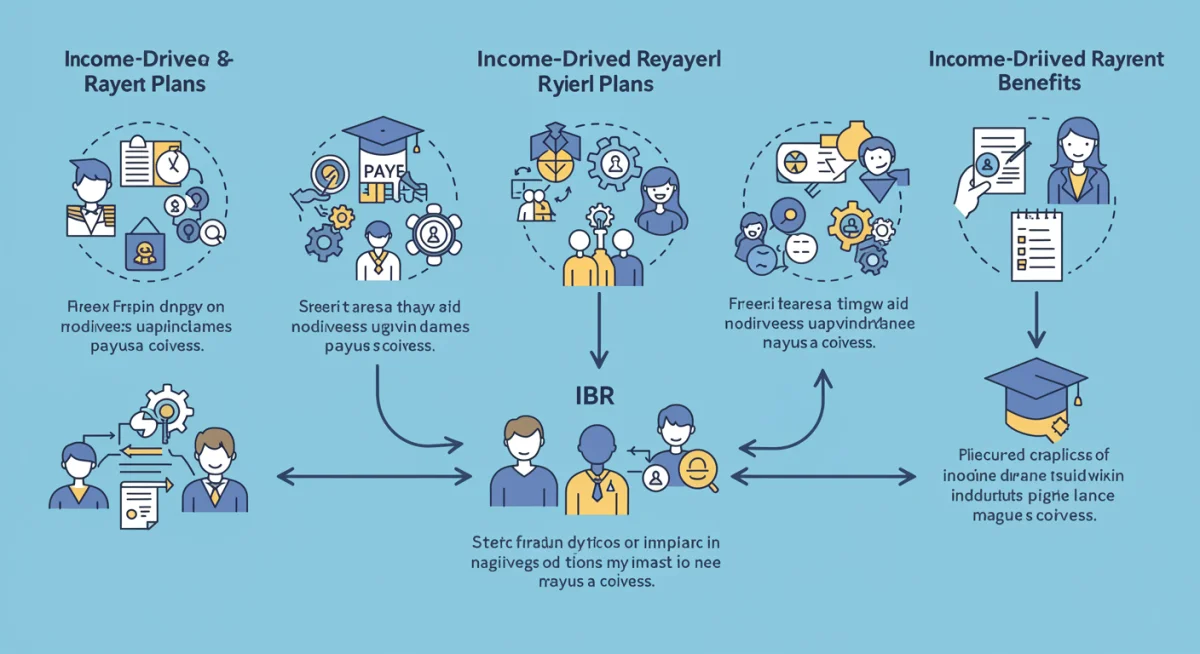
Income-Driven Repayment (IDR) plans are a cornerstone of federal student loan relief, designed to make monthly payments affordable based on your income and family size. These plans are particularly effective for borrowers aiming to reduce their monthly burden and potentially achieve loan forgiveness over time. Understanding the nuances of each IDR option is vital for selecting the best fit for your financial situation.
IDR plans typically cap your monthly payment at a percentage of your discretionary income, which can be a significant relief compared to standard repayment plans. This flexibility ensures that your loan payments do not consume an unmanageable portion of your budget, especially if your income fluctuates or is lower than anticipated.
Types of Income-Driven Repayment Plans
- Revised Pay As You Earn (REPAYE) Plan: Generally offers the lowest monthly payments, capped at 10% of discretionary income, regardless of when you took out your loans.
- Pay As You Earn (PAYE) Plan: Limits payments to 10% of discretionary income, but eligibility is restricted to newer borrowers with loans disbursed after October 1, 2007.
- Income-Based Repayment (IBR) Plan: Payments are 10% or 15% of discretionary income, depending on when you received your first loans. This plan is widely available.
- Income-Contingent Repayment (ICR) Plan: Payments are the lesser of 20% of discretionary income or what you would pay on a fixed 12-year plan, adjusted for income. It is the only IDR plan available for Parent PLUS Loan borrowers (after consolidation).
Under these plans, any remaining loan balance is forgiven after 20 or 25 years of qualifying payments, depending on the plan and whether you have graduate or undergraduate loans. While this can seem like a long time, the benefit of manageable payments and eventual forgiveness can be substantial. It’s important to recertify your income and family size annually to keep your payments accurate.
Choosing the right IDR plan requires careful consideration of your current income, family size, and future earning potential. Tools are available on the Department of Education’s website to help you estimate your payments under each plan. By strategically utilizing an IDR plan, you can significantly reduce your monthly payments and work towards that 10% debt reduction goal by 2025.
Public Service Loan Forgiveness (PSLF) Program
The Public Service Loan Forgiveness (PSLF) Program offers a powerful pathway to debt relief for borrowers working in eligible public service jobs. This program forgives the remaining balance on Direct Loans after you have made 120 qualifying monthly payments while working full-time for a qualifying employer. PSLF can be a game-changer for those dedicated to public service, potentially eliminating substantial portions of their student debt.
To qualify for PSLF, several criteria must be met consistently over a decade. It’s not a program to enter lightly, but with diligent tracking and adherence to requirements, the rewards are immense. Many borrowers overlook PSLF because they are unsure if their employer or job role qualifies, missing out on a significant opportunity for financial freedom.
Eligibility Requirements for PSLF
- Eligible Loans: Only Direct Loans qualify. If you have FFEL Program loans or Perkins Loans, you may need to consolidate them into a Direct Consolidation Loan to become eligible.
- Qualifying Employment: You must be employed full-time by a U.S. federal, state, local, or tribal government organization, or a non-profit organization that is tax-exempt under Section 501(c)(3) of the Internal Revenue Code.
- Qualifying Payments: You must make 120 qualifying monthly payments. These payments must be made under a qualifying repayment plan (typically an IDR plan), for the full amount due, after October 1, 2007.
It is crucial to submit the PSLF Employment Certification Form annually or whenever you change employers. This form helps track your progress towards the 120 qualifying payments and ensures your employment meets the program’s criteria. Neglecting to certify employment can lead to complications when applying for forgiveness.
While the PSLF program has faced scrutiny and changes over the years, it remains a vital option for eligible borrowers. Staying informed about program updates and meticulously documenting your employment and payments are key to successfully achieving PSLF. For many, PSLF is not just a path to debt reduction, but a complete elimination of their federal student loan burden, making it a powerful tool for financial planning.
Deferment and Forbearance: Temporary Relief Options
When facing temporary financial hardship, federal student loan deferment and forbearance can provide crucial breathing room. These options allow you to temporarily postpone or reduce your loan payments without defaulting. While they don’t directly reduce your principal balance, they can prevent financial strain and allow you to stabilize your finances before resuming payments.
It’s important to understand the distinction between deferment and forbearance, as their terms and implications for interest accrual differ. Making an informed choice can impact the overall cost of your loan over time.
Key Differences and Conditions
- Deferment: Allows you to temporarily postpone payments. For subsidized loans, the government pays the interest during deferment, meaning your loan balance won’t grow. Common deferments include unemployment, economic hardship, and in-school deferment.
- Forbearance: Also allows you to temporarily stop or reduce payments. However, interest typically accrues on all loan types (subsidized and unsubsidized) during forbearance. This means your total loan balance will increase, potentially making it more expensive in the long run. General forbearance and mandatory forbearance are common types.
While both options offer relief, deferment is generally preferable if you have subsidized loans, as interest does not accrue. Forbearance should be considered a last resort, as the accruing interest can significantly increase your total debt. Always explore deferment options first before resorting to forbearance.
These temporary relief options are not long-term solutions for reducing your debt, but they are invaluable tools for managing unexpected financial challenges. If you find yourself struggling to make payments, contact your loan servicer immediately to discuss your options. Proactive communication can prevent serious financial consequences and help you maintain good standing with your federal student loans.
Loan Consolidation and Refinancing Strategies
Federal student loan consolidation and refinancing are two distinct strategies that can simplify your repayment and potentially reduce your overall debt burden. While often used interchangeably, they serve different purposes and have different implications for your federal loan benefits.
Understanding the differences between these two options is critical to making the right choice for your financial situation. Each has its own set of advantages and disadvantages that can impact your long-term repayment strategy.
Federal Direct Consolidation Loans
A Direct Consolidation Loan allows you to combine multiple federal student loans into a single new loan with one monthly payment. This can simplify your finances and extend your repayment period, which may lower your monthly payment. The interest rate for a Direct Consolidation Loan is the weighted average of your previous loans’ interest rates, rounded up to the nearest one-eighth of a percent.
- Benefits: Simplifies payments, potentially lowers monthly payment, can make you eligible for certain IDR plans or PSLF if your original loans weren’t Direct Loans.
- Considerations: May increase the total interest paid over the life of the loan due to an extended repayment period. You may lose certain borrower benefits associated with your original loans.
Private Student Loan Refinancing
Refinancing, on the other hand, involves taking out a new loan from a private lender to pay off your existing federal and/or private student loans. This is often done to secure a lower interest rate, which can significantly reduce the total cost of your loan and potentially your monthly payment.
- Benefits: Potentially lower interest rate, which can save you a substantial amount of money. Can combine federal and private loans into one.
- Considerations: You will lose all federal loan benefits, including access to IDR plans, deferment, forbearance, and loan forgiveness programs like PSLF. Eligibility depends on your credit score and income.
For borrowers committed to federal loan protections, consolidation is the safer bet. If you have a strong financial standing and are confident you won’t need federal benefits, private refinancing might offer greater interest savings. Carefully weigh the pros and cons to determine which strategy aligns best with your 10% debt reduction goal for 2025.
Additional Strategies for Debt Reduction
Beyond federal repayment programs, several proactive strategies can help accelerate your progress towards reducing student loan debt by 10% in 2025. These approaches focus on increasing your payment capacity and making your money work harder for you. Combining these with federal programs can create a powerful plan for financial relief.
Even small changes in your financial habits can have a cumulative effect on your debt. It’s about finding what works best for your budget and consistently applying those strategies to chip away at your loan balance.
Making Extra Payments and the Avalanche Method
Making extra payments whenever possible is one of the most effective ways to reduce your principal balance and the total interest paid. Even an extra $50 or $100 per month can make a significant difference over time. Consider directing any unexpected income, like tax refunds or bonuses, towards your loans.
The debt avalanche method involves paying more than the minimum on the loan with the highest interest rate first, while making minimum payments on all other loans. Once the highest-interest loan is paid off, you apply the extra payment amount to the next highest-interest loan. This strategy saves you the most money on interest over the life of your loans.
Budgeting and Lifestyle Adjustments
- Create a Detailed Budget: Track your income and expenses to identify areas where you can cut back and free up more money for loan payments.
- Reduce Discretionary Spending: Evaluate non-essential expenses like dining out, entertainment, and subscriptions. Even small cuts can add up.
- Increase Income: Explore opportunities for a side hustle, freelance work, or asking for a raise to boost your income and dedicate more to debt repayment.
- Automate Payments: Set up automatic payments to ensure you never miss a due date and potentially qualify for a small interest rate reduction (often 0.25%).
Every dollar you save and direct towards your student loans is a dollar that contributes to your 10% debt reduction goal. By adopting a disciplined approach to your finances and actively seeking ways to increase your payments, you can significantly accelerate your path to financial freedom. These strategies, combined with federal repayment options, provide a comprehensive framework for tackling student loan debt effectively.
| Key Program/Strategy | Brief Description |
|---|---|
| Income-Driven Repayment (IDR) | Adjusts monthly payments based on income and family size, with potential forgiveness after 20-25 years. |
| Public Service Loan Forgiveness (PSLF) | Forgives remaining Direct Loan balance after 120 qualifying payments in public service. |
| Deferment & Forbearance | Temporary payment postponement during financial hardship; interest accrual varies. |
| Loan Consolidation | Combines multiple federal loans into one, simplifying payments and potentially extending terms. |
Frequently Asked Questions About Student Loan Debt
▼
The first step is to gather all information about your federal loans, including loan types, balances, and interest rates. Access this through your Federal Student Aid (FSA) account. Understanding your current loan portfolio is essential for choosing the most effective repayment strategy.
▼
Yes, you can switch between different IDR plans if you meet the eligibility requirements for the new plan. It’s often beneficial to compare options annually during your income recertification to ensure you are on the most advantageous plan for your current financial situation.
▼
Generally, legitimate deferment or forbearance periods do not directly harm your credit score because your loan is considered current. However, interest may accrue, increasing your total debt, which could indirectly impact your debt-to-income ratio in the long run.
▼
Refinancing federal student loans with a private lender can offer lower interest rates but means losing all federal protections, such as income-driven repayment, deferment, and forgiveness programs. It’s only recommended if you have stable income, excellent credit, and are certain you won’t need federal benefits.
▼
You can determine if your employer qualifies for PSLF by submitting the Public Service Loan Forgiveness (PSLF) & Temporary Expanded PSLF (TEPSLF) Certification & Application Form. The Department of Education will review your employer’s eligibility and inform you of the outcome.
Conclusion
Achieving the goal of Reducing Student Loan Debt by 10% in 2025: A Guide to Federal Repayment Programs is entirely feasible with a clear understanding and strategic application of the available federal options. From leveraging income-driven repayment plans to exploring the significant benefits of Public Service Loan Forgiveness, and utilizing temporary relief options like deferment, borrowers have a robust toolkit at their disposal. Supplementing these federal programs with personal finance strategies like making extra payments and diligent budgeting can further accelerate your progress. The journey to financial freedom from student debt requires proactive engagement and informed decision-making, but the resources and pathways are there to support you every step of the way.
Autor